Floor Sanding vs. Floor Replacement: Which Should You Choose?
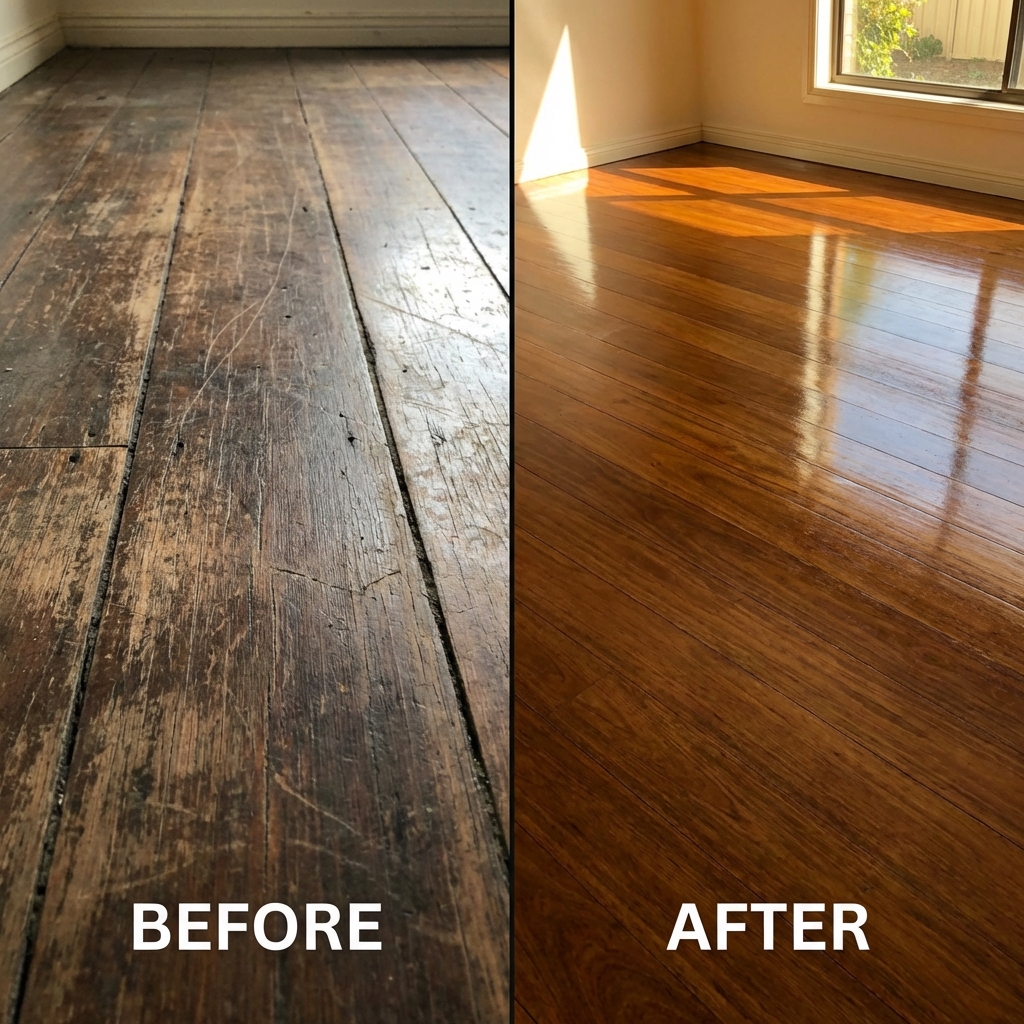
One of the most common questions Auckland homeowners ask when renovating is: "Should I restore my old wooden floors or just rip them up and lay new ones?"
It's a valid dilemma. New floors offer a fresh start, but they come with a hefty price tag. Restoring your existing timber floors is often the smarter financial move, but is it always the right choice? In this guide, we compare floor sanding vs. replacement across cost, durability, aesthetics, and value to help you make the best decision for your home.
1. Cost Comparison: The Numbers
Budget is often the deciding factor. Let's look at the average costs for a typical 50 sqm Auckland living area:
Auckland Cost Comparison (50 sqm)
- Floor Sanding & Polishing: $3,000 - $4,250
Includes: Prep, sanding, coating (approx. $60-$85/sqm) - New Timber Floor Installation: $6,000 - $12,000+
Includes: Removal of old floor, materials, installation ($120-$240+/sqm)
Verdict: Sanding is 60-70% cheaper than replacement.
2. Aesthetic Appeal: Character vs. Perfection
Restored Original Floors
Original floors—especially native NZ timbers like Rimu, Matai, and Kauri—have distinct character, grain patterns, and history that modern plantation timber often lacks.
- Pros: Unique character, rich patina, retains superior native timber quality.
- Cons: May have permanent imperfections (gaps, old borer holes, deep stains) which add "rustic charm" but aren't flawless.
New Flooring
New floors offer uniformity and a wider range of modern pre-finished options.
- Pros: Flawless finish, no gaps, wide variety of modern widths/colors.
- Cons: Often softer fast-growth timber (less durable), generic look, significantly higher cost.
3. When Is Sanding NOT an Option?
While we can work miracles on old floors, some situations require replacement:
- Floors are too thin: If the timber above the tongue and groove is less than 3mm, sanding may expose the nails or weaken the boards.
- Structural Damage: Extensive rot, borer infestation compromising strength, or severe water damage causing crumbly boards.
- Uneven Subfloor: If the subfloor has collapsed or is severely uneven, new flooring (and subfloor leveling) might be necessary.
4. The "Green" Choice
Restoring existing floors is the most eco-friendly option.
- Zero Waste: No old flooring goes to landfill.
- Resource Conservation: No new trees are cut down for your floor.
- Carbon Footprint: Minimal manufacturing and transport emissions compared to new products.
5. Timeline and Disruption
Sanding: Takes 3-5 days. You usually can't walk on the floors during the coating phase (2-3 days).
Replacement: Takes 5-10 days depending on demolition and subfloor prep.
Our Recommendation
If your home has original native timber floors, restoration is almost always the better choice. You simply cannot buy Rimu or Matai of the same quality today without paying a fortune for recycled timber. The "imperfections" in these floors are what give them value and soul.
However, if you have damaged particle board or cheap laminate, or if you want a complete layout change (e.g., laying timber over concrete), new flooring is the correct path.
Unsure if your floors can be saved?
We offer free assessments. We'll inspect your timber thickness and condition and give you an honest recommendation.
Frequently Asked Questions
Is it cheaper to sand floors or replace them?
Sanding is significantly cheaper. Professional floor sanding typically costs $60-$85 per sqm, whereas installing new timber flooring costs $120-$200+ per sqm (materials and labor). Restoring existing floors usually saves 60-75% compared to replacement.
How many times can a timber floor be sanded?
Most solid timber floors (19mm thick) can be sanded 4-6 times depending on how much wood is removed each time. Engineered floors with a 3-6mm wear layer can only be sanded 1-2 times.
When should I replace my wooden floors instead of sanding?
Replace your floors if there is structural rot, extensive water damage, termite infestation, or if the boards have been sanded too thin (less than 2-3mm above the tongue/groove).
Does sanding remove all stains and scratches?
Sanding removes surface scratches, dents, and surface stains. Deep water stains or pet urine stains that have penetrated through the board may require board replacement or a darker stain to conceal.
Can I change the color of my floor with sanding?
Yes! Once sanded to raw timber, we can apply various stains to completely change the look of your floor—from whitewash to dark walnut or black japan—before sealing it.