Water Damage on Wooden Floors: Repair vs. Replace
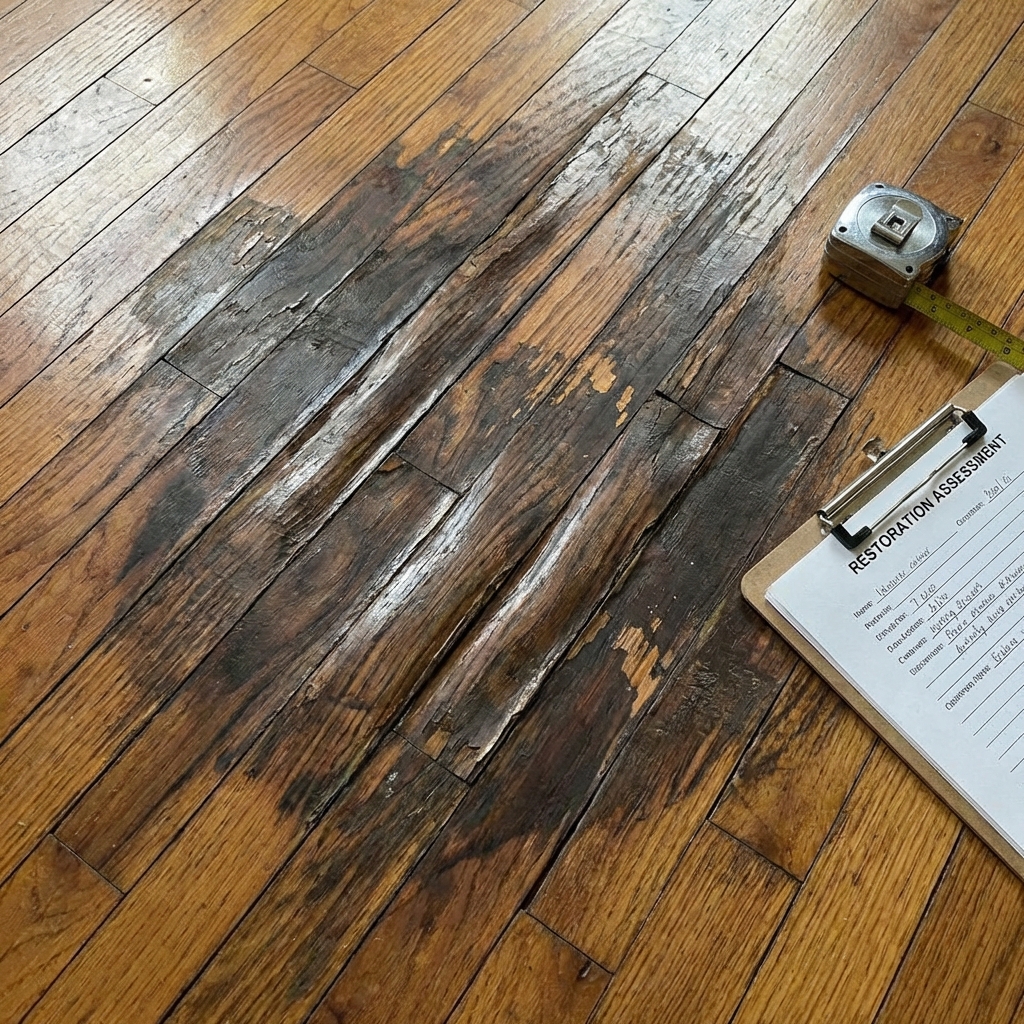
Water is the natural enemy of timber flooring. Whether it's a slow leak from a refrigerator, a burst pipe, or a window left open during a storm, water damage needs to be addressed immediately to save your floors.
The good news is that most water-damaged timber floors can be saved without full replacement.
Signs of Water Damage
- Discoloration: Dark or black patches on the wood.
- Cupping: The edges of the board are higher than the center (concave).
- Crowning: The center of the board is higher than the edges (convex).
- Buckling: The floor pulls away from the subfloor, lifting up noticeably.
Repair Strategy by Damage Type
1. Cupping (Minor Moisture)
This happens when the bottom of the board is wetter than the top.
The Fix: Stop the source of moisture immediately. Dehumidify the room. WAIT. Do not sand a cupped floor until it is 100% dry and flat (moisture content matches non-affected areas). If you sand too early, the boards will crown when they eventually dry. Often, a cupped floor will flatten itself out once dry and may only need a light screen and recoat.
2. Black Staining
Water reacts with the tannins in wood (especially Oak) creating black marks.
The Fix: Sanding removes surface stains. For deeper marks, we use Oxalic Acid (wood bleach) to neutralize the stain before refinishing.
3. Buckling / Rot
Severe ongoing leaks can rot the subfloor or cause boards to separate.
The Fix: Targeted board replacement. We carefully remove the damaged boards and weave in recycled timber of the same species and age to match the existing floor seamlessly.
Preventing Future Damage
A quality polyurethane finish is your first line of defense.
- Moisture Barrier: Ensure your underfloor moisture barrier (if applicable) is intact.
- Matte Finish: Helps hide future minor water marks better than gloss.
- Instant Cleanup: Wipe spills immediately. Never mop timber floors with a soaking wet mop.
Have a Flooded Floor?
We provide emergency assessments and insurance quotes.
Frequently Asked Questions
Will sanding remove black water stains?
Surface stains often sand out. However, deep black stains (oxidation marks) caused by iron nails reacting with damp timber or pet urine penetrating deep into the wood may not sand out completely. We can treat these with oxalic acid to lighten them, but sometimes board replacement or dark staining is required.
How long does a wet floor take to dry?
It is critical to let the floor dry completely before sanding. This can take 2-6 weeks depending on the severity of the leak and the humidity. Sanding a damp floor will result in 'cupping' later when it dries out.
Does insurance cover floor repair?
Typically, yes. If the damage is from a sudden event (burst pipe, dishwasher leak), most insurance policies cover the restoration. We work directly with insurance providers to supply detailed quotes.