Engineered Wood Floor Sanding: Can It Be Done?
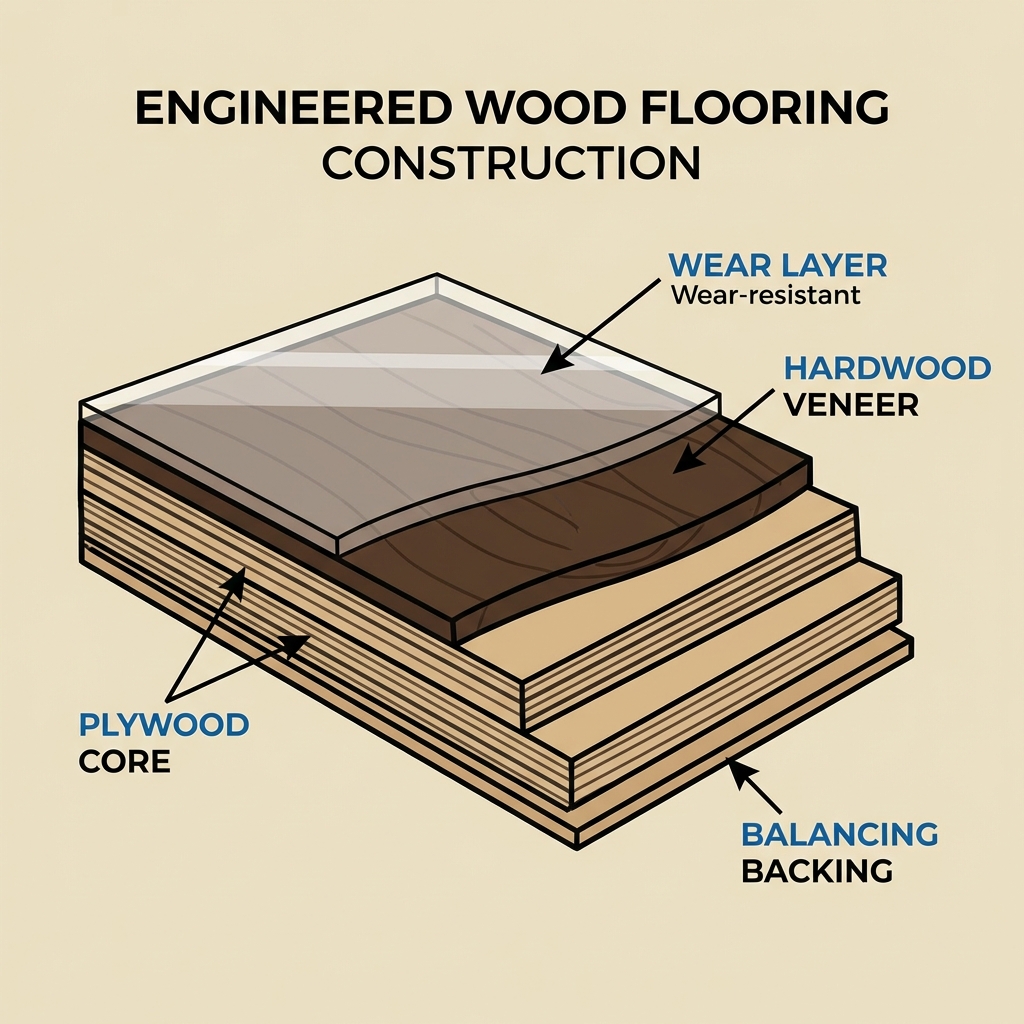
Engineered wood flooring has become incredibly popular in Auckland homes due to its stability and pre-finished convenience. But unlike solid native timber, there is a limit to how much you can restore it.
The question usually is: "Can I sand my engineered floor?" The answer is yes, but with strict conditions.
Understanding Engineered Flooring
Engineered flooring consists of a plywood or softwood core topped with a thin veneer of real hardwood (Oak, Jarrah, etc.). This top layer is called the Wear Layer.
The thickness of this wear layer dictates the lifespan of the floor:
- 0.5mm - 2mm: Cannot be sanded. Replacement or Recoat only.
- 3mm - 4mm: Can be sanded 1-2 times by a professional.
- 6mm+: Can be sanded 3-4 times, similar to solid wood.
The Risks of Sanding Engineered Wood
It requires a delicate touch. An inexperienced sander using a heavy belt machine can grind through a 3mm veneer in seconds, exposing the plywood core underneath. Once this happens, the board is ruined and must be replaced.
At Done Right Flooring, we use specialized techniques for engineered floors:
- Finer Grits: We start with less aggressive sandpaper to preserve thickness.
- Rotary Sanding: We often rely more on rotary sanders than belt sanders for a gentler removal of the old finish.
- Veneer Check: We always inspect the profile before starting to confirm depth.
The Alternative: Screen & Recoat
If your floor is scratched but the veneer is too thin for a full sand, a "Screen & Recoat" (Reglazing) is the solution.
The Process:
- Chemical deep clean to remove grease and wax.
- Light abrasion (screening) to roughen the surface without removing wood.
- Application of a fresh coat of polyurethane.
This removes surface scuffs, restores the sheen, and adds a protective layer—all without touching the precious timber veneer.
Not Sure About Your Floor?
Don't guess. Let us inspect your engineered floor to see if it safe to sand.
Frequently Asked Questions
How do I know if my engineered floor can be sanded?
You need to check the 'wear layer'. This is the top layer of real hardwood. It must be at least 3mm thick to be sanded safely. You can check this by removing a floor vent or looking at the profile at a doorway transition.
How many times can engineered wood be sanded?
Typically only once or twice. A 3mm wear layer generally allows for one full professional sand. A 6mm wear layer might allow for 3 sands.
What if the veneer is too thin to sand?
If the wear layer is too thin (less than 2mm), we recommend a 'screen and recoat' or reglazing. This deeply cleans and abrades the old finish without removing any timber, allowing us to apply a fresh coat of polyurethane.